My patient has painful pustules and nodules in her axillae.  How can I distinguish hidradenitis suppurativa (HS) from folliculitis or recurrent skin abscesses?

A key differentiating factor between hidradenitis suppurativa (HS) and more common conditions such as folliculitis or recurrent abscesses is the location and recurrence pattern of the lesions. HS is clinically diagnosed based on the following typical lesion characteristics:

  • Morphology: open comedones, pustules, painful nodules, abscesses, sinus tracks and scarring; 
  • Distribution: intertriginous or apocrine gland-rich areas, such as the axillae, inframammary folds, lower abdomen/waist, gluteal cleft, groin and inner thighs; and
  • Frequency: recurrent lesions in the same locations, with at least two or more episodes in six months1,2

In contrast, folliculitis involves inflammation of the hair follicle and may present with pustules or boils; however, lesions are superficial, occur anywhere hair is present, and are not complicated by deep nodules, sinus tracks or scarring.2

Although recurrent abscesses may mimic HS, they are typically unilateral or asymmetric, fluctuant and caused by bacterial infection with positive wound cultures. In contrast, HS is frequently a symmetric, sterile inflammatory condition unless secondarily infected. Additionally, abscesses generally respond to incision and drainage and antibiotics and do not result in sinus tracks or scarring.2

Once you suspect HS, your management may be guided by its severity using the following disease stages (Hurley staging).

  • Mild disease (Hurley stage I): localized lesions without sinus tracks or scarring. Treat with antimicrobial washes (chlorhexidine) and topical antibiotics (clindamycin).3
  • Moderate disease (Hurley stage II): typical lesions in multiple locations with or without sinus tracks and scarring. Treat with antimicrobial washes, topical antibiotics, and systemic antibiotics (tetracyclines or clindamycin). Consider adding rifampin, metronidazole, or moxifloxacin in refractory cases.3
  • Severe disease (Hurley stage III): diffuse painful lesions with extensive sinus tracks and scarring. Requires dermatology referral for consideration of biologics (eg, adalimumab), laser, parenteral antibiotics and/or surgical interventions.3

Across all stages of severity, patients should be counseled on smoking cessation, weight loss, diet modification and appropriate pain management.4 Acute flares may be treated with warm compresses, tetracyclines, and intralesional steroids.3 Incision and drainage is reserved for severe, painful lesions as routine drainage could worsen tunneling.5

Bonus Pearl: Did you know the average diagnosis delay for HS is up to 10 years?2 Primary care physicians have a unique position in early recognition and treatment of this debilitating disease.

Contributed by Taylor Lynch, MD, Mercy Hospital-St. Louis, St. Louis, Missouri

Liked this post? Download the app on your smart phone and sign up below to catch future pearls right into your inbox, all for free!

Subscribe to Blog via Email

Enter your email address to subscribe to this blog and receive notifications of new posts by email.

References:

  1. Wieczorek M, and Walecka I. Hidradenitis suppurativa – known and unknown disease. Reumatologia 2016: 56: 337-339. doi:10.5114/reum.2018.80709. https://pubmed.ncbi.nlm.nih.gov/30647478/.
  2. Snyder, CL, Chen XL, Porter ML. Obstacles to early diagnosis and treatment of hidradenitis suppurativa: Current Perspectives on Improving Clinical Management. Clin Cosm Invest Derm 2023;16:1833-1841. doi:10.2147/CCID.S301794. https://pmc.ncbi.nlm.nih.gov/articles/PMC10361090/.
  3. Alikhan A, Sayed C, Alavi A, et al. North American clinical management guidelines for hidradenitis suppurativa: A publication from the United States and Canadian Hidradenitis Suppurativa Foundations: Part II: Topical, intralesional, and systemic medical management. J Am Acad Derm 2019;81:91-101. doi:10.1016/j.jaad.2019.02.068. https://pubmed.ncbi.nlm.nih.gov/30872149/.
  4. Hermak S, and Lev-Tov H. Integrative approaches in the management of hidradenitis suppurativa. J Am Acad Derm 2024;91: S42-S45. doi:10.1016/j.jaad.2024.09.016. https://pubmed.ncbi.nlm.nih.gov/39626999/.
  5. Chawla S, Toale C, Morris M, et al. Surgical management of hidradenitis suppurativa: A narrative review. J Clin Aesth Derm 2022;15: 35-41. https://pubmed.ncbi.nlm.nih.gov/35309275/.

Disclosures/Disclaimers: The listed questions and answers are solely the responsibility of the author and do not necessarily represent the official views of Mercy Hospital-St. Louis, Massachusetts General Hospital, Harvard Catalyst, Harvard University, their affiliate academic healthcare centers, or its contributors. Although every effort has been made to provide accurate information, the author is far from being perfect. The reader is urged to verify the content of the material with other sources as deemed appropriate and exercise clinical judgment in the interpretation and application of the information provided herein. No responsibility for an adverse outcome or guarantees for a favorable clinical result is assumed by the author. Thank you!


My patient has painful pustules and nodules in her axillae.  How can I distinguish hidradenitis suppurativa (HS) from folliculitis or recurrent skin abscesses?

Should I choose a bactericidal over bacteriostatic antibiotic in the treatment of my patient with pneumonia complicated by bacteremia?

You don’t have too!  Although “bacteriostatic” antibiotics have traditionally been regarded as inferior to “bactericidal” antibiotics in the treatment of serious infections, a 2018 “myth busting” systemic literature review1 concluded that bacteriostatic antibiotics are just as effective against a variety of infections, including pneumonia, non-endocarditis bacteremia, skin and soft tissue infections and genital infections; no conclusion can be made in regards to endocarditis or bacterial meningitis, however, due insufficient clinical evidence.1-3

Interestingly, most of the studies included in the same systemic review showed that bacteriostatic antibiotics were more effective compared to bactericidal antibiotics.1 So, for most infections in hospitalized patients, including those with non-endocarditis bacteremia, the choice of antibiotic among those that demonstrate in vitro susceptibility should not be based on their “cidal” vs “static” label.

Such conclusion should not be too surprising since the definition of bacteriostatic vs bactericidal is based on arbitrary in vitro constructs and not validated by any available in vivo data. In addition, static antibiotics may kill bacteria as rapidly as cidal antibiotics in vitro at higher antibiotic concentrations.3

Another supportive evidence is a 2019 study finding similar efficacy of sequential intravenous-to-oral outpatient antibiotic therapy for MRSA bacteremia compared to continued IV antibiotic therapy despite frequent use of bacteriostatic oral antibiotics (eg, linezolid, clindamycin and doxycycline). 4


References

  1. Wald-Dickler N, Holtom P, Spellberg B. Busting the myth of “static vs cidal”: as systemic literature review. Clin Infect Dis 2018;66:1470-4. https://academic.oup.com/cid/article/66/9/1470/4774989
  2. Steigbigel RT, Steigbigel NH. Static vs cidal antibiotics. Clin Infect Dis 2019;68:351-2. https://academic.oup.com/cid/article-abstract/68/2/351/5067395
  3. Wald-Dickler N, Holtom P, Spellberg B. Static vs cidal antibiotics; reply to Steigbigel and Steigbigel. Clin Infect Dis 2019;68:352-3. https://academic.oup.com/cid/article-abstract/68/2/352/5067396?redirectedFrom=fulltext
  4. Jorgensen SCJ, Lagnf AH, Bhatia S, et al. Sequential intravenous-to-oral outpatient antbiotic therapy for MRSA bacteraemia: one step closer.  J Antimicrob Chemother 2019;74:489-98.  https://www.ncbi.nlm.nih.gov/pubmed/30418557


If you liked this post, sign up under MENU and get future pearls straight into your mailbox!

Should I choose a bactericidal over bacteriostatic antibiotic in the treatment of my patient with pneumonia complicated by bacteremia?

Is clindamycin an acceptable empiric monotherapy for Staphylococcus aureus (SA) infections in adults?

Clindamycin is active in-vitro against many strains of SA and is indicated in the treatment of SA mild-to-moderate skin and soft tissue infections (SSTIs), including some methicillin-resistant strains 1,2.  However, evidence for its use as monotherapy against SA infections in other body sites is limited or lacking.   For example, in adults with pneumonia, efficacy of clindamycin is based solely on case series that excluded monotherapy3.  For bone and joint infections, clindamycin has limited evidence of efficacy in adults, and is not recommended in the treatment of endovascular or central nervous system infections2.

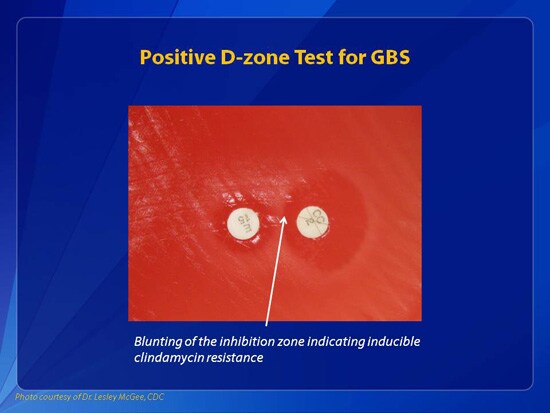
 Emergence of resistance to clindamycin in previously susceptible SA isolates may also occur during therapy conferred by erythromycin resistance methylase (erm) gene which is typically screened for by the “D-zone” test2 (Figure).  Increasing resistance of SA to clindamycin has led to recommendation against its empiric use for severe or complicated SSTIs (e.g. large abscess or deep infections)4.  

dzoneclindapcrop

Fig. The “E” disk (on left) contains erythromycin; “CC” disk (on right) contains clindamycin. The test detects inducible clindamycin resistance in erythromycin-resistant , clindamycin- susceptible isolates (http://www.cdc.gov/groupbstrep/images/lab-positivegbs-lg.jpg).

References:

  1. Miller LG, Daum RS, Creech CB, Young D, Downing MD, Eells SJ, Pettibone S, Hoagland RJ, Chambers HF. Clindamycin versus trimethoprim–sulfamethoxazole for uncomplicated skin infections. N Engl J Med 2015;372:1093-103. 
  2. Liu C, Bayer A, Cosgrove SE, Daum RS, Fridkin SK, Gorwitz RJ, Kaplan SL, Karchmer AW, Levine DP, Murray BE, Rybak MJ. Clinical practice guidelines by the Infectious Diseases Society of America for the treatment of methicillin-resistant Staphylococcus aureus infections in adults and children. Clin Infect Dis 2011;52:e18-55. 
  3. Lobo LJ, Reed KD, Wunderink RG. Expanded clinical presentation of community-acquired methicillin-resistant Staphylococcus aureus pneumonia. Chest 2010; 138:130-6. 
  4. VanEperen AS, Segreti J. Empirical therapy in Methicillin-resistant Staphylococcus Aureus infections: An Up-To-Date approach. J Infect Chemother 2016;22:351-9.

Contributed by Nathan T. Georgette, 4th year, Harvard Medical School student


Is clindamycin an acceptable empiric monotherapy for Staphylococcus aureus (SA) infections in adults?