Do most patients with mycotic aneurysms have endocarditis?

No! In fact, the great majority of patients who develop mycotic aneurysm (MAs) in the postantibiotic era have no evidence of endocarditis1-3.

MAs are thought to be related to microbial arteritis due to blood stream infection of any source with implantation of circulating pathogen (usually bacterial) in atherosclerotic, diseased, or traumatized aortic intima. Plus, MAs may develop due to an adjacent infectious process (eg, vertebral osteomyelitis), either through direct extension or via lymphatic vessels, pathogen seeding of vasa vasorum, or infection of a pre-existing aneurysm1,2.  All these factors may occur in the absence of endocarditis.

Many of your patients may be at risk of MA such as those with advanced age or history of diagnostic or therapeutic arterial catheterization, illicit intravascular drug use, hemodialysis and depressed host immunity1-3..  Staphylococcus aureus, Salmonella sp, S. epidermidis and Streptococcus sp are common culprits in descending order1-3.

So think of MA in your patient with recent blood stream infection,  particularly due to S. aureus or Salmonella sp, in the setting of persistent signs of infection  with or without evidence of endocarditis.

Final Fun Fact: Did you know that the term “mycotic aneurysm” is a misnomer, having been first introduced by Sir William Osler to describe aneurysms of the aortic arch in a patient with (you guessed it) bacterial not fungal endocarditis?

References:

  1. Gomes MN, Choyke PL, Wallace RB. Infected aortic aneurysms: A changing entity. Ann Surg 1992;215:435-42. https://www.ncbi.nlm.nih.gov/pubmed/1616380
  2. Muller BT, Wegener OR, Grabitz K, et al. Mycotic aneurysms of the thoracic and abdominal aorta and iliac arteries: Experience with anatomic and extra-anatomic repair in 33 cases. J Vasc Surg 2001;33:106-13. https://www.ncbi.nlm.nih.gov/pubmed/11137930
  3. Mukherjee JT, Nautiyal A, Labib SB. Mycotic aneurysms of the ascending aorta. Tex Heart Inst J 2012;39:692-5. https://www.ncbi.nlm.nih.gov/pmc/articles/PMC3461658/
Do most patients with mycotic aneurysms have endocarditis?

When should I suspect spinal epidural abscess in my 55 year old patient with severe back pain?

 It cannot be overemphasized that up 50% of patients with spinal epidural abscess (SEA) have no known risk factors,  one-half may have no fever,  and 20-40% lack leukocytosis1. In fact, the “classic triad” of back pain, fever, and neurological deficits is found only in the minority of patients!  No wonder that up to 75% of patients SEA are misdiagnosed on their initial healthcare encounter1!

Potential “red flags” for infectious causes of low back pain include age >50 y, night pain, unremitting pain even when supine, duration > 6 weeks, fever, chills, night sweats, weight loss, conditions associated with Staphylococcus aureus bacteremia (eg intravenous drug use), incontinence, saddle anesthesia, and severe or rapidly progressive neurologic deficits1,2.  

ESR and C-reactive protein (CRP) are almost uniformly elevated in SEA1 and can serve as a good starting point in excluding this condition when in doubt.   In patients ≥50 y of age with low back pain, obtaining ESR routinely has been suggested for detection of systemic disease (eg cancer, infection)3.  Similarly, in a recent algorithm of severe back pain, routine measurements of ESR and CRP, even in the absence of any neurological findings, has been recommended1; elevation of either may necessitate consideration of MRI.

Liked this post? Download the app on your smart phone and sign up below to catch future pearls right into your inbox, all for free!

Subscribe to Blog via Email

Enter your email address to subscribe to this blog and receive notifications of new posts by email.

References:

  1. Bond, A, Manian FA. Spinal epidural abscess: a review with special emphasis on earlier diagnosis. BioMed Res International 2016; https://www.hindawi.com/journals/bmri/2016/1614328/http://dx.doi.org/10.1155/2016/1614328  
  2. Della-Giustina. Acute low back pain: recognizing the “red flags” in the workup. Consultant 2013;53:436-440. http://www.consultant360.com/article/acute-low-back-pain-recognizing-%E2%80%9Cred-flags%E2%80%9D-workup
  3. Jarvik JG, Deyo RA. Diagnostic evaluation of low back pain with emphasis on imaging. Ann Intern Med 2002;137:586-597. http://annals.org/aim/article/715687/diagnostic-evaluation-low-back-pain-emphasis-imaging

Disclosures: The listed questions and answers are solely the responsibility of the author and do not necessarily represent the official views of Mercy Hospital-St. Louis or its affiliate healthcare centers, Mass General Hospital, Harvard Medical School or its affiliated institutions. Although every effort has been made to provide accurate information, the author is far from being perfect. The reader is urged to verify the content of the material with other sources as deemed appropriate and exercise clinical judgment in the interpretation and application of the information provided herein. No responsibility for an adverse outcome or guarantees for a favorable clinical result is assumed by the author. Thank you!

Additional disclosure: The author of this post (FAM) also coauthored reference 1.

When should I suspect spinal epidural abscess in my 55 year old patient with severe back pain?

Why is there a predilection for the tricuspid valve (TV) infection among injection drug users (IDUs) with infective endocarditis (IE)?

Although right-sided IE accounts for only 9% of IE cases among non IDUs, in IDUs it accounts for over three-quarters of IE cases1.  

Several potential mechanisms have been posited to explain susceptibility of TV to infection in IDUs, including endothelial damage due to repeated inoculation of small bacterial loads, specific substances (eg talc) injected with drugs,  cocaine-induced vasospasm and thrombus formation, and drug-induced pulmonary hypertension associated with increased pressure gradients and turbulence.  In addition, facilitation of bacterial adhesion due to the deposition of immune complexes (eg antibody vs antigens in injected drugs) on the TV and coating of the injected particulate matter with bacterial adherence matrix molecules on valve surfaces may also play an important role1,2.

Add to these potential factors a higher risk nasal and cutaneous colonization with Staphylococcus aureus (a common cause of IE) among IDUs, and we have a perfect storm!

References

  1. Frontera JA, Gradon JD. Right-sided endocarditis in injection drug users: review of proposed mechanisms of pathogenesis. Clin Infect Dis 2000;30:374-9.
  2. Chahood J, Yakan AS, Saad H, et al. Right-sided infective endocarditis and pulmonary infiltrates: An update. Cardiol Rev 2016;24:230-37.
Why is there a predilection for the tricuspid valve (TV) infection among injection drug users (IDUs) with infective endocarditis (IE)?

When should I pay attention to the minimum inhibitory concentration (MIC) of an antibiotic despite the lab reporting it to be in the “Susceptible” range?

In most situations, you will most likely choose an antibiotic based on the laboratory reporting of “Susceptible” (vs “Resistant”), not the actual MIC value of the drug and that’s fine.  

However, there may be a few instances when you may need to pay more attention to the actual MICs. Many experts recommend caution when “high” MICs within a susceptible range are observed in the following situations:   

  1. Vancomycin MIC >1 ug/ml in Staphylococcal aureus (methicillin-sensitive or –resistant) infections because of its possible association with clinical failure and, at times, increased mortality1,2.
  2. Ciprofloxacin or levofloxacin MIC>0.25 ug/ml in bacteremia caused by Gram-negative bacilli (including Enterobacteriacae as well as Pseudomonas aeruginosa) because of its association with an adverse outcome (eg, longer average hospital stay post-culture and duration of infection) but not necessarily mortality3-5.
  3. Levofloxacin MIC ≥ 1.0 ug/ml in Streptococcus pneumoniae infections, because of its association with an adverse clinical outcome based on drug pharmacodynamics and anecdotal reports of treatment failure6,7.


References

  1. Jacob JT, DiazGranados CA. High vancomycin minimum inhibitory concentration and clinical outomces in adults with methicillin-resistant Staphylococcus aureus infections: a meta-analysis. Int J Infect Dis 2013;17:e93-e100.  https://www.ncbi.nlm.nih.gov/pmc/articles/PMC3780595/
  2. Kalil AC, Van Schooneveld TC, Fey PD, et al. Association between vancomycin minimum inhibitory concentration and mortality among patients with Staphylococcus aureus bloodstream infections: A systematic review and meta-analysis. JAMA 2014;312:1552-1564. https://www.ncbi.nlm.nih.gov/pubmed/25321910
  3. DeFife R, Scheetz MH, Feinglass J, et al. Effect of differences in MIC values on clinical outcomes in patients with bloodstream infections caused by Gram-negative organisms treated with levofloxacin. Antimicrob Agents Chemother 2009;53:1074-79. http://aac.asm.org/content/53/3/1074.full
  4. Falagas ME, Tansarli GS, Rafailidis PI, et al. Impact of antibiotic MIC on infection outcome in patients with susceptible Gram-negative bacteria a systematic review and meta-analysis. Antimicrob Agents Chemother 2012;56:4214-22. https://www.ncbi.nlm.nih.gov/pubmed/22615292
  5. Zelenitsky SA, Harding GKM, Sun S, et al. Treatment and outcome of Pseudomonas aeruginosa bacteremia: an antibiotic pharmacodynamics analysis. J Antimicrob Chemother 2003;52:668-674. https://www.ncbi.nlm.nih.gov/pubmed/12951354
  6. Davidson R, Cavalcanti R, Brunton JL, et al. Resistance to levofloxacin and failure of treatment of pneumococcal pneumonia. N Engl J Med 2002;346:. 2002;346:747-50. https://www.ncbi.nlm.nih.gov/pubmed/11882730
  7. De Cueto M, Rodriguez JM, Soriano MJ, et al. Fatal levofloxacin failure in treatment of a bacteremic patient infected with Streptococcus pneumoniae with a preexisting parC mutation. J Clin Microbiol 2008;46:1558-1560.  http://jcm.asm.org/content/46/4/1558.full

Contributed in part by Nick Van Hise, Pharm.D., BCPS, Infectious Diseases Clinical Pharmacist, Edward-Elmhurst Hospitals, Naperville, Illinois.

If you liked this post, sign up under MENU and get future pearls straight into your mailbox!

When should I pay attention to the minimum inhibitory concentration (MIC) of an antibiotic despite the lab reporting it to be in the “Susceptible” range?

Is clindamycin an acceptable empiric monotherapy for Staphylococcus aureus (SA) infections in adults?

Clindamycin is active in-vitro against many strains of SA and is indicated in the treatment of SA mild-to-moderate skin and soft tissue infections (SSTIs), including some methicillin-resistant strains 1,2.  However, evidence for its use as monotherapy against SA infections in other body sites is limited or lacking.   For example, in adults with pneumonia, efficacy of clindamycin is based solely on case series that excluded monotherapy3.  For bone and joint infections, clindamycin has limited evidence of efficacy in adults, and is not recommended in the treatment of endovascular or central nervous system infections2.

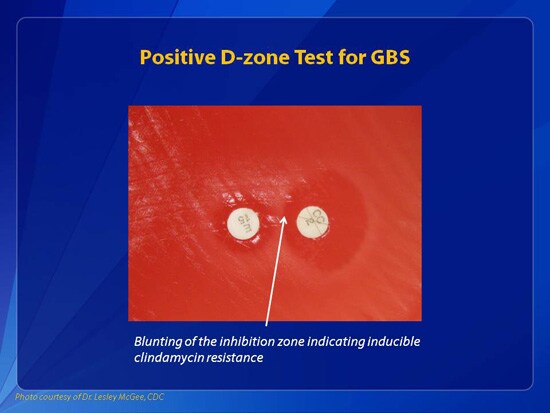
 Emergence of resistance to clindamycin in previously susceptible SA isolates may also occur during therapy conferred by erythromycin resistance methylase (erm) gene which is typically screened for by the “D-zone” test2 (Figure).  Increasing resistance of SA to clindamycin has led to recommendation against its empiric use for severe or complicated SSTIs (e.g. large abscess or deep infections)4.  

dzoneclindapcrop

Fig. The “E” disk (on left) contains erythromycin; “CC” disk (on right) contains clindamycin. The test detects inducible clindamycin resistance in erythromycin-resistant , clindamycin- susceptible isolates (http://www.cdc.gov/groupbstrep/images/lab-positivegbs-lg.jpg).

References:

  1. Miller LG, Daum RS, Creech CB, Young D, Downing MD, Eells SJ, Pettibone S, Hoagland RJ, Chambers HF. Clindamycin versus trimethoprim–sulfamethoxazole for uncomplicated skin infections. N Engl J Med 2015;372:1093-103. 
  2. Liu C, Bayer A, Cosgrove SE, Daum RS, Fridkin SK, Gorwitz RJ, Kaplan SL, Karchmer AW, Levine DP, Murray BE, Rybak MJ. Clinical practice guidelines by the Infectious Diseases Society of America for the treatment of methicillin-resistant Staphylococcus aureus infections in adults and children. Clin Infect Dis 2011;52:e18-55. 
  3. Lobo LJ, Reed KD, Wunderink RG. Expanded clinical presentation of community-acquired methicillin-resistant Staphylococcus aureus pneumonia. Chest 2010; 138:130-6. 
  4. VanEperen AS, Segreti J. Empirical therapy in Methicillin-resistant Staphylococcus Aureus infections: An Up-To-Date approach. J Infect Chemother 2016;22:351-9.

Contributed by Nathan T. Georgette, 4th year, Harvard Medical School student


Is clindamycin an acceptable empiric monotherapy for Staphylococcus aureus (SA) infections in adults?

Should empiric coverage of Staphylococcus aureus bacteremia (SAB) routinely include an anti-staphyloccal β-lactam?

Although there are no clinical trials comparing  therapy with vancomycin and β-lactam to vancomycin alone in the empiric treatment of S. aureus bacteremia (SAB), combination therapy has been advocated by some based on reports of reduced morbidity and mortality (1). More recently however, a retrospective study involving 122 hospitals failed to find superiority of vancomycin-β-lactam combination therapy compared to vancomycin alone for empiric therapy of SAB (2).

We do know that despite its activity against methicillin-susceptible S. aureus (MSSA), vancomycin is less bactericidal (3), with a higher rate of relapse than anti-staphylococcal β-lactams in the treatment of established SAB (4).

So although it may not be clear if we need to empirically place all of our patients suspected of SAB on a vancomycin-β-lactam from the get go,  once MSSA has been confirmed, vancomycin should be dropped in favor of an anti-staphylococcal β-lactam.

Liked this post? Download the app on your smart phone and sign up below to catch future pearls right into your inbox, all for free!

Subscribe to Blog via Email

Enter your email address to subscribe to this blog and receive notifications of new posts by email.

References 

  1. McConeghy KW, Bleasdale SC, Rodvold KA. The empirical combination of vancomycin and a β-lactam for staphylococcal bacteremia. Clin Infect Dis 2013;57:1760-5. https://www.ncbi.nlm.nih.gov/pubmed/23985343
  2. McDaniel JS, Perencevich EN, Diekema DJ, et al. Comparative effectiveness of beta-lactams versus vancomycin for treatment of methicillin-susceptible Staphylococcus aureus bloodstream infections among 122 hospitals. Clin Infect Dis 2015;61:361-7. https://www.ncbi.nlm.nih.gov/pubmed/25900170 
  3. Fernandez Guerrero ML, de Gorgolas M. Comparative activity of cloxacillin and vancomycin against methicillin-susceptible Staphylococcus aureus experimental endocarditis. J Antimicrob Chemother 2006;58:1066-1069. https://www.ncbi.nlm.nih.gov/pubmed/16931540
  4. Chang F-Y, Peacock JE, Musher DM, et al. Staphylococcus aureus bacteremia: recurrence and the impact of antibiotic treatment in a prospective multicenter study. Medicine (Baltimore) 2003;82:333-9. https://www.ncbi.nlm.nih.gov/pubmed/14530782
Should empiric coverage of Staphylococcus aureus bacteremia (SAB) routinely include an anti-staphyloccal β-lactam?

What is the sensitivity of nose swabs in detecting methicillin-resistant Staphylococcus aureus (MRSA) pneumonia?

In MRSA pneumonia, the sensitivity of nasal swab PCR may vary from as low as 24.2% to 88% (1-3). A 2018 meta-analysis found an overall sensitivity of 70.9% (community-acquired pneumonia/healthcare-associated pneumonia [HCAP] 85%, ventilator-associated pneumonia 40%) with overall negative predictive value of 96.5% (based on an overall MRSA pneumonia prevalence of 10%) (4). 

A single center  study involving  patients with possible HCAP and a low clinical pulmonary infection score (CPIS) — for whom antibiotics may not be necessary anyway (5)—suggested that discontinuation of empiric vancomycin in patients without an adequate respiratory culture and a negative nose and throat culture may be reasonable (6).

However, a prospective study of ICU patients concluded that “clinicians cannot reliably use the results of initial negative MRSA nasal swab results to withhold empirical MRSA coverage from patients who otherwise are at risk for MRSA infection” (3).

The previously cited 2018 meta-analysis study (4) cautions against use of MRSA screening in patients with structural lung disease (eg, cystic fibrosis or bronchiectasis) because colonization may be more frequent in the lower respiratory tract in these patients and screening tests may therefore be discordant (4).

Collectively, the available data suggest that it is reasonable to use a negative MRSA screen to help exclude pneumonia due to this pathogen in patients in whom MRSA infection is not highly suspected or those who are not severely ill.


References

  1. Rimawi RH, Ramsey KM, Shah KB, et al. Correlation between methicillin-resistant Staphylococcus aureus nasal sampling, and S. aureus pneumonia in the medical intensive care unit. Infect Control Hosp Epidemiol 2014;35:590-92. https://www.ncbi.nlm.nih.gov/pubmed/24709733
  2. Dangerfield B, Chung A, Webb B, et al. Predictive value of methicillin-resistant Staphylococcus aureus (MRSA) nasal swab PCR assay for MRSA pneumonia. Antimicrob Agents Chemother 2014;58:859-64. https://www.ncbi.nlm.nih.gov/pubmed/24277023
  3. Sarikonda KV, Micek ST, Doherty JA, et al. Methicillin-resistant Staphylococcus aureus nasal colonization is a poor predictor of intensive care unit-acquired methicillin-resistant Staphylococcus aureus infections requiring antibiotic treatment. Crit Care Med 2010;38:1991-1995. https://www.ncbi.nlm.nih.gov/pubmed/20683260
  4. Parente DM Cunha CB Mylonakis E et al. The clinical utility of methicillin-resistant Staphylococcus aureus (MRSA) nasal screening to rule out MRSA pneumonia: A diagnostic meta-analysis with antimicrobial stewardship implications. Clin Infect Dis 208;67:1-7.
  5. Napolitano LM. Use of severity scoring and stratification factors in clinical trials of hospital-acquired and ventilator-associated pneumonia. Clin Infect Dis 2010;51:S67-S80. https://www.ncbi.nlm.nih.gov/pubmed/20597675
  6. Boyce JM, Pop O-F, Abreu-Lanfranco O, et al. A trial of discontinuation of empiric vancomycin therapy in patients with suspected methicillin-resistant Staphylococcus aureus health care-associated pneumonia. Antimicrob Agents Chemother 2013;57:1163-1168. http://aac.asm.org/content/57/3/1163.full.pdf
What is the sensitivity of nose swabs in detecting methicillin-resistant Staphylococcus aureus (MRSA) pneumonia?